







Get professional solutions
We look forward to having in-depth exchanges with you and exploring more composite material application technologies and solutions.

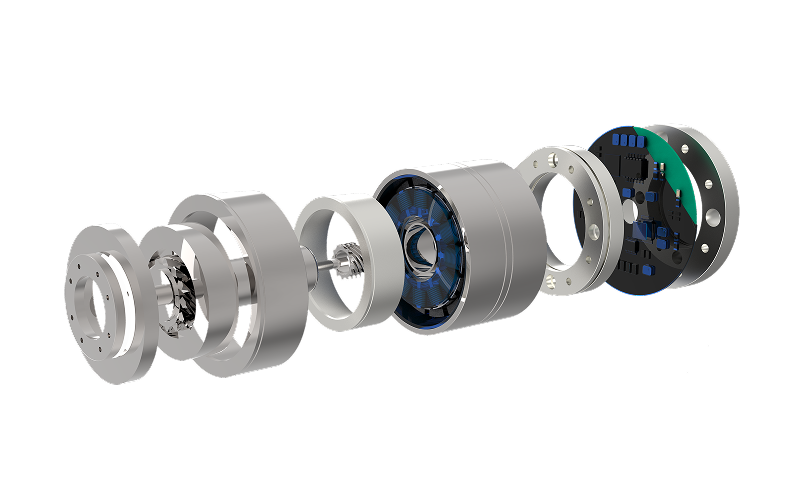
Overall potting of stator winding
Suitable for high power density joint motors
Realize the integration of thermal conduction, insulation and structural fixation
Penetration of windings and tiny gaps, reducing voids and bubbles
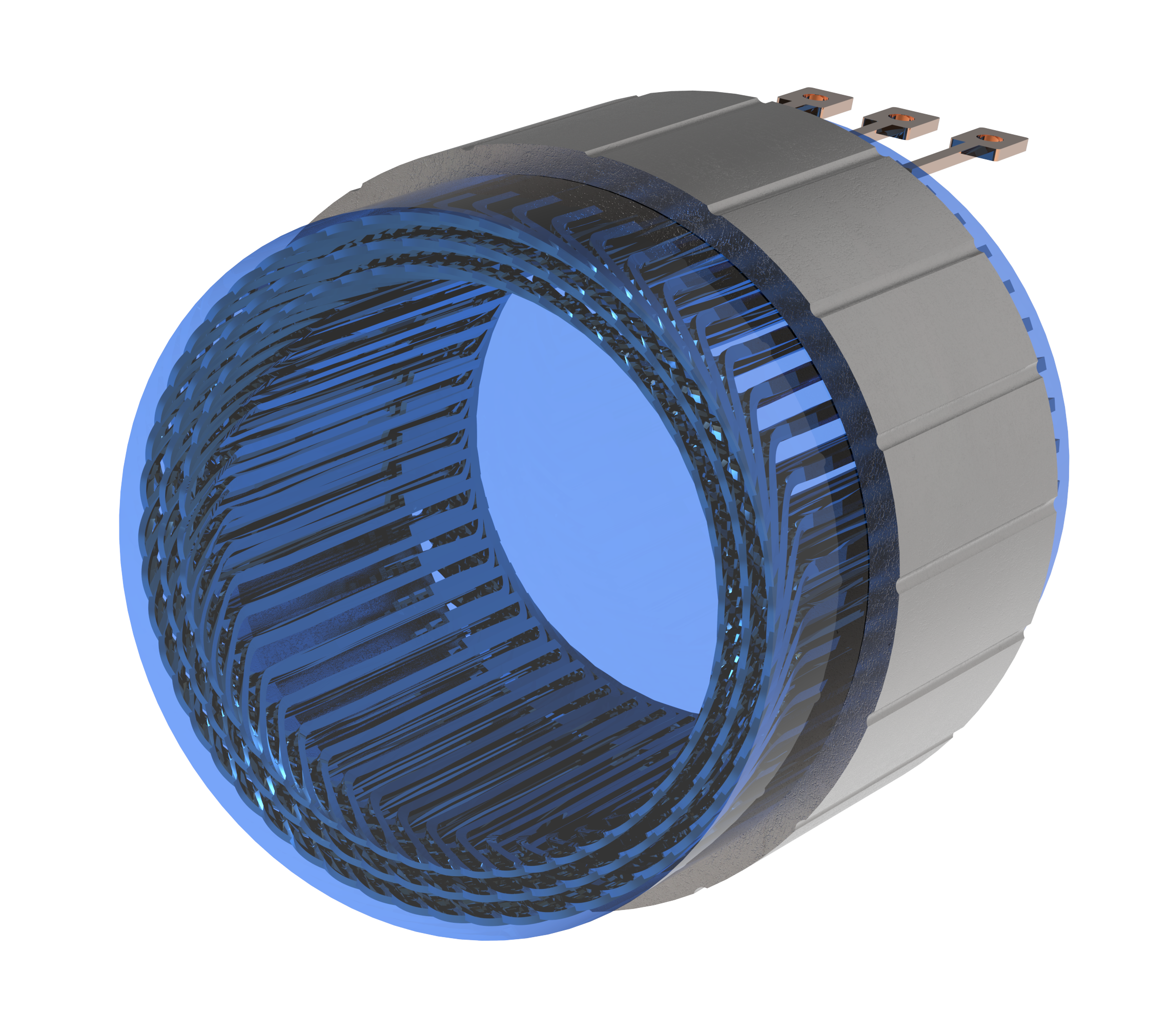
The viscosity is lower than 2500 mPa·s at 80°C, and it can fully penetrate the windings and small gaps to form a dense potting structure.
The thermal conductivity is 2.0 W/m·K, which can quickly dissipate heat from the magnetic core and windings, reduce device temperature rise, and improve system thermal management efficiency.
High Tg and low CTE relieve thermal stress caused by hot and cold cycles and improve packaging reliability.
Enhance the mechanical strength of windings and magnetic devices while providing stable electrical insulation performance.
It has good resistance to high and low temperature impact, humidity and heat resistance and environmental aging resistance, meeting the requirements for long-term stable operation of robots.
| Classification | characteristic | MEP 4210 | MEP 4215 | MEP 4570 |
| Uncured | Viscosity after mixing [mPa・s] Brookfield LVDV | 25℃/14#/20rpm: 73,000 | 25℃/14#/10rpm: 75,000 | 25℃/14#/20rpm: 35,916 |
| 60℃/14#/20rpm: 7,700 | 60℃/14#/20rpm: 7,800 | 60℃/14#/20rpm: 4,058 | ||
| 80℃/14#/20rpm: 3,200 | 80℃/14#/20rpm: 3,400 | 80℃/14#/20rpm: 2,199 | ||
| Mixed density [g/cm³] | 2.59 | 2.61 | 2.73 | |
| Curing conditions | 2hr@100℃ + 3hr@150℃ + 1hr@180℃ | 2hr@100℃ + 3hr@150℃ + 1hr@180℃ | 2hr@100℃ + 3hr@150℃ + 1hr@180℃ | |
| After curing | hardness | Shore D97 | Shore D97 | Shore D92 |
| Thermal conductivity [W/m・K] | 1 | 1.5 | 2 | |
| Tg [℃] | 158 | 158 | 173 | |
| CTE below Tg [ppm/K] | 18 | 18 | 13 | |
| CTE above Tg [ppm/K] | 73 | 73 | 65 | |
| Young's coefficient [GPa] | 5.3 | 5.7 | 5.2 | |
| Shear strength [MPa] | 13 | 13 | 13 | |
| Tensile strength [MPa] | 18 | 18 | 18 | |
| Volume resistivity [ohm-cm] | > 1×10¹⁴ | > 1×10¹⁴ | > 1×10¹⁴ | |
| Insulation performance [kV/mm] | >20 | >20 | >20 | |
| Operating temperature [℃] | -40~200 | -40~200 | -40~200 |
